Buying Guide
What to Look for When You’re Buying a New Vacuum
Buying a vacuum can feel unnecessarily complicated.
There are cordless models, upright models, canister vacuums, robot vacuums, handheld options, wet-and-dry machines, and seemingly endless combinations of features.
Then there are the numbers.
- Power.
- Runtime.
- Capacity.
- Filtration.
- Brush systems.
It can be difficult to know which details actually matter.
The answer starts with your home.
Start With Your Floors
The most important question is what you're actually cleaning.
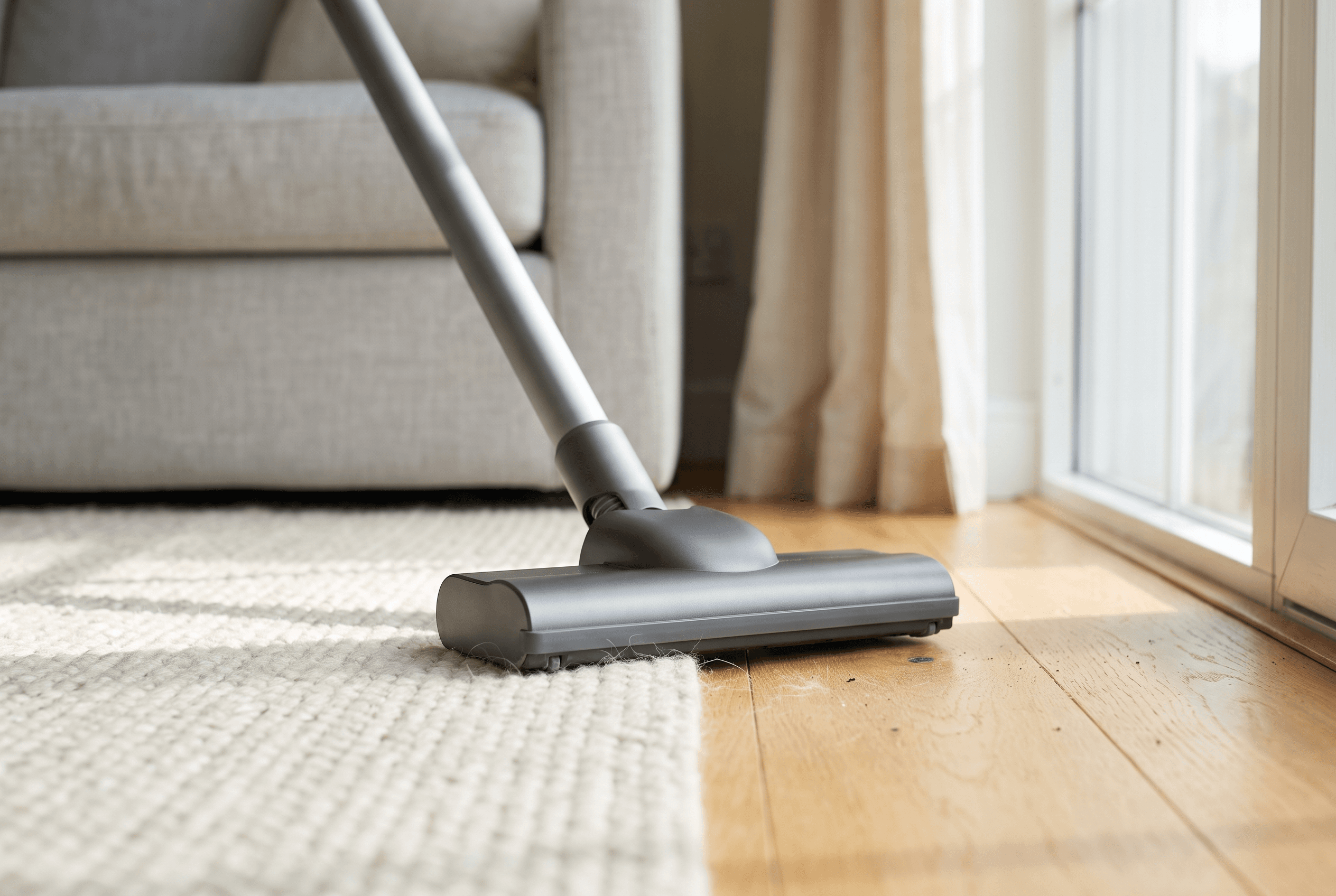
A home with mostly hard floors has different requirements from a home with wall-to-wall carpet.
If you have a mixture of surfaces, you'll want a vacuum that can handle both without requiring constant adjustments.
Think about your actual floor plan rather than the features listed on the box.
Think About Hair
If you have pets or long hair in the household, brush design matters.
Hair can wrap around roller brushes and create another cleaning job.
Look for a model designed to reduce tangling or make the brush easier to remove and clean.
This is one of those features you may not appreciate until you've dealt with a tangled brush several times.
Consider How Much Storage You Have
A vacuum can perform beautifully and still be annoying if you don't have anywhere to put it.
If storage space is limited, a compact cordless model may make more sense than a larger upright.
If you have a dedicated utility closet, size may be less important.
The best vacuum is one you can store conveniently enough that you're actually willing to use it.
Cordless or Corded?
Cordless vacuums are convenient because you aren't constantly moving between outlets. But battery runtime matters.
If your home is large and you want to clean the entire space in one session, check how long the vacuum actually runs under normal use.
For smaller homes or quick daily cleanups, cordless convenience can be particularly appealing.
Don’t Ignore the Emptying System
You can have an excellent vacuum and still hate using it if emptying the dust container is messy.
Look at how the bin opens, where the debris goes, and how often it needs to be emptied.
A simple system can make the entire cleaning process feel easier.
Check the Attachments
More attachments don't automatically mean a better vacuum.
What matters is whether the attachments solve problems you actually have.
A crevice tool can be useful for narrow spaces.
An upholstery tool can help with furniture.
A brush attachment can be useful for delicate surfaces.
If you're unlikely to use six specialized accessories, don't let the number influence your decision too much.
Look at Maintenance
Every vacuum needs some maintenance. Filters need cleaning or replacing. Brushes collect debris. Dust containers need emptying.
The question is how easy those tasks are.
A vacuum that requires complicated maintenance may become frustrating over time.
Think About Your Cleaning Habits
Do you prefer cleaning the entire house once a week? Or do you quickly vacuum the kitchen every day?
Do you want something that stays in a closet? Or something you can grab immediately?
Your cleaning style should influence the vacuum you choose.
A lightweight model may be ideal for frequent quick cleanups.
A larger machine may make more sense for deeper weekly cleaning.
Do You Need a Robot Vacuum?
Robot vacuums can be useful for maintaining floors between deeper cleaning sessions.
But they're not necessarily a replacement for a conventional vacuum. Think of them as another tool.
If you want floors to receive frequent light cleaning without manually running a vacuum every day, a robot model could make sense.
Don’t Buy Based on Suction Alone
Performance matters, but one number rarely tells the entire story.
How the vacuum handles different surfaces, how well it picks up debris, how easy it is to maneuver, and how simple it is to maintain all matter too.
A vacuum that is technically powerful but awkward to use may not be the best choice for your home.
The Bottom Line
The right vacuum isn't the one with the longest feature list.
It's the one that fits your floors, your space, your storage, your cleaning habits, and the kinds of messes you regularly deal with.
Start there. Then compare models. It makes the decision much easier.